Note-taking is a hobby, not a tool! Why I’m dismantling 13+ years of digital hoarding to actually get work done.
Published:
I recently read Beatrice Manuel’s article, “Why I stopped chasing the perfect system and started keeping imperfect notes,” and one line specifically resonated with me the most: “The pursuit of perfection is procrastination wearing a very convincing disguise.” At this point in my life, I couldn’t agree more.
I thought it might be helpful to share a few of my previous bad habits here. I hope to help others avoid the same traps, and I’d love to hear your advice on how I can simplify even further.
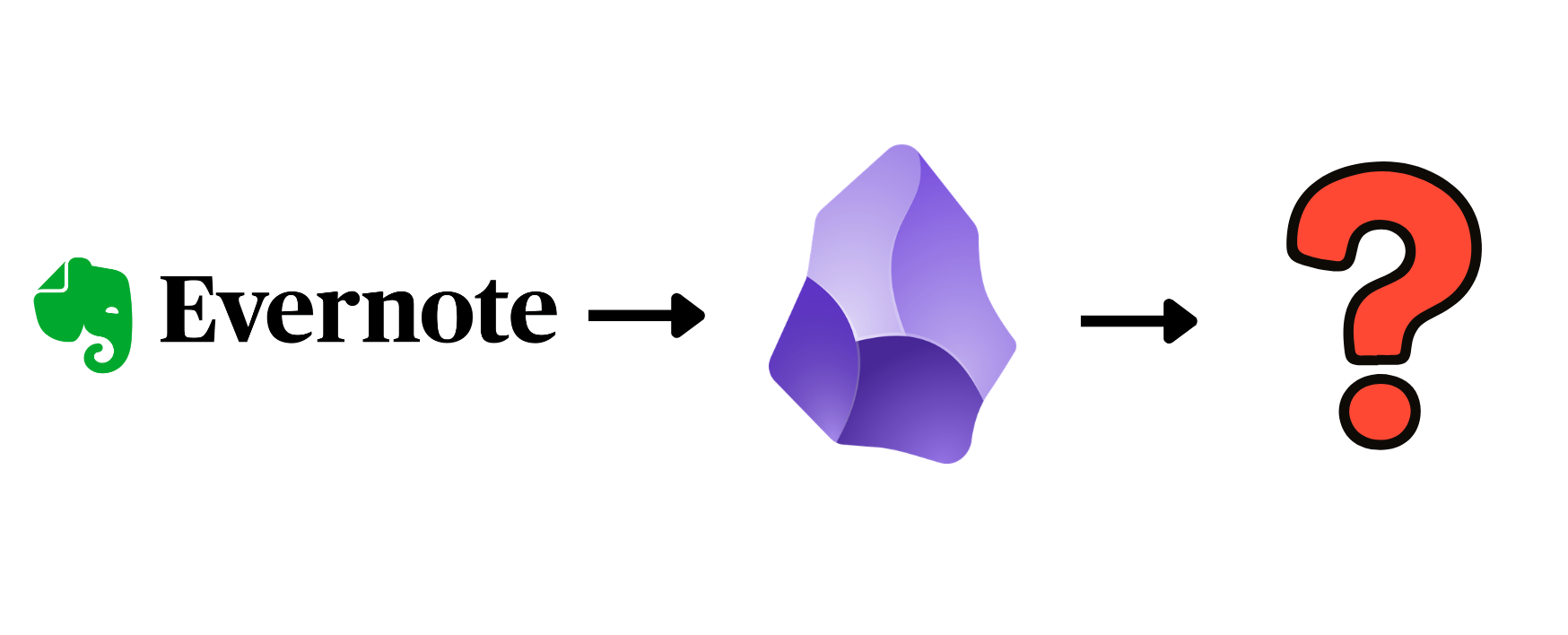
After 10 years on Evernote, I switched to Obsidian in 2023. After all these years, I’ve realized the following:
- I was spending more time “maintaining the vault” than actually doing the work, usually as a way to procrastinate on more important tasks.
- I was trying to use Obsidian as an “all-in-one” app for everything in my life.
- I admit that much of my vault feels like a “local Wikipedia”. Even though, I kept using AI to look things up instead of checking my own notes.
- I used to set aside time to organize and maintain the vault, but it always felt boring and I could never stay consistent with it.
I spent years trying to optimize my workflow by brainstorming ideas and researching ways to improve in my free time. I eventually realized that dedicating so much time to “organizing” was actually a sign that something was wrong. Comparing my slow, heavy workflow to people who used simple tools (or no note-taking app at all) made me realize that the time I spent wasn’t paying dividends.
The “Kill List”: What I scrapped to reclaim my time
- Desktop Folders > Vaults: I moved my active Projects (from PARA) out of Obsidian and directly into desktop folders. They are now much easier to access and act upon.
- Action over Collecting: Instead of hoarding links, I focus on sharing. I post what I find to get feedback and build my personal brand.
- No more “Local Databases”: I stopped using Obsidian to build local versions of IMDb and Goodreads. It was a massive time-sink to maintain clipped notes. Using the original platforms is much more convenient and offers better features.
- Retiring the Web Clipper: I no longer save job descriptions or site snapshots. I’m using AI anyway to assist in making tailored documents on the fly, and I can always find the original info by using the search feature. For recipes, I’d rather just add them manually than spend time customizing a template for a single website.
- Single Source of Truth: I stopped using the Google Contacts sync plugin. Maintaining two sources was a mistake. I even tried taking “relationship notes” to stay invested in people, but it felt wrong. If I can’t remember it, set it as a task, or put it in the Google Contacts “notes” section, I’d rather let it go.
- The Meal-Planning System: I stopped using my shopping and meal system (which was a complex alternative to Samsung Food using four community plugins and locally stored all possible items in a folder structure as a label). For me, rigid planning failed because I couldn’t control my eating habits; for example, I’d eat all my snacks in the first few days instead of over the planned period. Now, I just buy healthy food and cook spontaneously. It’s also a great excuse to get out and walk to the store more often.
- Low-Friction Journaling: I stopped habit tracking and text journaling. If I can’t act on the data, I don’t track it. I’ve switched to audio recordings; they are faster, more expressive, and require zero formatting. I rarely listen back, but knowing the idea is captured makes me feel good.
- Externalizing Backups: I stopped using Obsidian to store backup data like PDFs, e-books, RSS feeds, and configuration files. I’ve moved these to Google Drive for direct syncing. For my code snippets and scripts, I now use GitHub Gist. This keeps my vault lightweight and focused only on active thought.
I spent a long time resisting systems like PARA because I wanted to build something uniquely mine. I even had the ego to think I’d write a book about my “perfect” system one day!
Cutting these habits out was difficult, but learning to cut my losses and move on has been liberating. I finally feel like I’m moving toward true productivity. However, the transition is far from complete; there are still a few areas where I’m sticking to my old ways for now:
Work in Progress: Moving Toward Action
- The Document Archive: I still use the Archive (from PARA), but it contains my personal documents only.
- Re-purposing “Areas”: I am transforming the knowledge previously hidden in my Areas into active projects. My goal is to eventually delete the static notes and replace them with:
- Anki flashcards for long-term retention of what I’ve learned.
- Blog posts to share my findings and build my personal brand.
- Apps or websites that turn my research into potential income.
Not everything was a waste of time. These two habits have proven their value by reducing my mental load:
Systems That Actually Work (My “Keep” List)
- Travel Notes: I maintain a “Countries” folder generated via a Python script and API. Instead of saving/downloading social media content (Reels, Shorts, etc.), I log the recommendations directly into these country notes. Having a ‘ready-to-use’ list of places saves me from frantically searching for saved clips or planning from scratch when I actually travel.
- Social Activity Notes: As an event planner, I keep a curated folder of interesting activities I find online. When I’m planning the next outing with friends, this folder eliminates decision fatigue. I no longer have to “think” of what to do.
- Travel Checklist: I keep a few high-value checklists in my Areas folder that save me immense time and stress. For example, my travel/sleepover checklist note ensures I never forget an essential item. I use the “Meta Bind” and “Templater” plugins to instantly reset the check-boxes before going through it. By logging feedback after every journey, I’ve optimized my packing so well that I now travel with only a backpack. It is incredibly rewarding to be precise, especially compared to my siblings who bring massive suitcases because they aren’t sure what they need and end up bringing everything “just in case.”
This isn’t a one-time cleanup; it’s an ongoing process. I plan to provide updates as my workflow evolves. My main takeaways are:
The Outcome: A New Philosophy of Information
- Detachment and Deletion: I’ve adopted the mentality that everything is destined to disappear. I no longer think twice before deleting something. If a note isn’t actionable, it’s destined for the trash. Keeping a minimalist vault is my new default.
- Avoiding the “Information Void”: I’ve become hyper-aware of what I store. A note-taking app should be an engine for action, not a dumping ground for the void. Embracing this has been powerful, as I am no longer “attached” to any specific software.
- Subtractive Growth: A healthy vault should have fewer notes over time, not more. My goal is to continuously prune and reduce, moving toward a purely minimalist, action-oriented workflow.
Leave a Comment
Your email address will not be published. Required fields are marked *